



















Caribbean Citizenship by Investment (CBI) programs have recently attracted considerable attention following new developments involving the European Union. Headlines about a possible phase-out have naturally raised questions among investors and families: Are the programs ending? Will existing citizenship be affected? What happens to applications already in progress?
The situation is evolving, but some of the claims circulating online go further than the facts currently support. The key is to distinguish between what has actually been announced, what is being discussed, and what remains uncertain.
What Has Actually Happened?
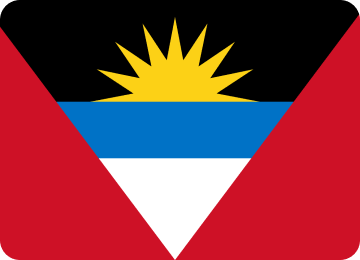
In June 2026, the European Commission formally suggested that five Eastern Caribbean countries — Antigua and Barbuda, Dominica, Grenada, Saint Kitts and Nevis, and Saint Lucia phase out their Citizenship by Investment programs by June 1, 2028.
According to statements from the governments concerned, the request came in letters dated June 25, 2026, signed by EU Commissioner Magnus Brunner, since the EU has not published the letters itself.
The request was made under the EU’s revised Visa Suspension Mechanism, which took effect in late December 2025.
The dates to watch next are September 2026, when interim measures are expected, and December 2026, when the European Commission publishes its next review, rather than the June 2028 target alone.
The five leaders met in Roseau, Dominica, on July 10, 2026, and agreed to send a high-level mission to Brussels, with Saint Vincent and the Grenadines also attending.
However, this does not mean that the Caribbean CBI programs have already been shut down. The governments of the five countries are engaging with the EU and have agreed to pursue a coordinated regional response.
Rumor: Caribbean CBI Programs Are Being Shut Down
Are the Caribbean CBI programs shutting down? The answer is no. The reality is more nuanced.
The European Commission has requested a phase-out, but the individual Caribbean governments have not simply announced that their programs are closing.
For example, Antigua & Barbuda has publicly stated that its CBI Program will continue while the government engages with the EU and pursues diplomatic options.
The five Eastern Caribbean governments are also working together on their response. Their discussions are focused on finding a path that addresses international concerns while taking into account the economic importance of CBI programs to the region.
So, the June 1, 2028 date should not be treated as an immediate shutdown date.
What About Existing Citizens?
This is one of the most important concerns for people who already hold a Caribbean passport.
The current EU communication concerning the phase-out of CBI programs does not state that citizenship already granted to individuals will automatically be cancelled or revoked.
Existing citizens should therefore not assume that the EU’s request means their citizenship is suddenly at risk.
It is important, however, to distinguish citizenship from visa-free travel. The EU’s revised framework concerns the possibility of suspending visa-free access, which is a separate issue from whether citizenship already granted remains valid.
All five governments have said they will honor citizenship already granted, regardless of what the EU requests.
As discussions continue, existing citizens should rely on official announcements rather than online rumors or speculative reports.
What About Pending Applications?
The EU’s request does not establish a blanket rule that all pending CBI applications must be cancelled.
At the same time, applicants should recognize that future regulatory changes can differ from one program to another. Governments may introduce new requirements or transitional arrangements as discussions with international partners continue.
For this reason, anyone with an application in progress should follow developments relating specifically to the program and jurisdiction involved, rather than assuming that a change affecting one Caribbean program automatically applies to all five.
Are Caribbean CBI Programs Becoming More Strict?
Yes, there has been a clear move towards stronger regulation, due diligence, and regional oversight.
The Eastern Caribbean countries have already undertaken reforms aimed at improving the integrity and transparency of their CBI programs. The establishment of the Eastern Caribbean Citizenship by Investment Regulatory Authority (ECCIRA) is part of this broader move towards harmonized regional standards. Antigua & Barbuda has also introduced further proposed reforms, including independent audits and enhanced oversight of its Citizenship by Investment Unit.
The programs are also moving toward a “genuine link” requirement, with Dominica introducing a mandatory in-person visit and passport collection step, and a region-wide physical presence requirement pending implementation.
These developments should not necessarily be viewed as signs that the programs are disappearing. They also reflect efforts by the participating countries to respond to international concerns and strengthen the way their programs operate.
What About Visa-Free Schengen Access?
This is another area where headlines can be misleading.
The EU has not simply cancelled Schengen visa-free access for Caribbean citizens because of the current developments. However, the revised Visa Suspension Mechanism means that the continued operation of CBI programs can now be a basis for considering the suspension of visa-free access.
All five countries remain on the EU’s visa-exempt list, and their citizens can still travel to the Schengen Area without a visa for up to 90 days in any 180 days.
That makes the ongoing discussions between the Caribbean governments and the EU important. But it would be premature to present a future loss of visa-free access as a certainty.
What Should Investors Take Away?
There are genuine regulatory developments taking place across the Caribbean CBI landscape. However, regulatory uncertainty should not be confused with an immediate end to the programs.
For existing citizens, there is currently no indication in the EU request that citizenship already granted will automatically be revoked. For applicants, there is no blanket announcement that existing applications have been cancelled.
Prospective investors should nevertheless make decisions based on the latest official program rules and obtain professional advice before proceeding. The situation may continue to develop as Caribbean governments engage with the EU.
How UNO Capital Can Help
At UNO Capital, we understand that changing CBI regulations can create uncertainty for investors and families. Our team closely monitors program updates, regulatory developments, and policy changes across Caribbean Citizenship by Investment programs so our clients can make decisions based on the latest available information.
We can help you:
- Understand confirmed program and regulatory changes.
- Distinguish official developments from rumors and speculation.
- Assess how changes may affect prospective or pending applications.
- Understand program-specific requirements and possible developments.
- Understand the application process with up-to-date professional guidance.
- Stay informed as the Caribbean CBI landscape continues to evolve.
We aim to keep clients informed, prepared, and confident as investment migration regulations develop.
If you are considering Caribbean Citizenship by Investment or have concerns about an existing application or citizenship, contact UNO Capital for professional guidance based on the latest available information.


