


















For a long time, moving abroad felt like something only a few people could do. That’s no longer true. In 2026, relocating has become a practical option for professionals, families, and retirees looking for stability, better pay, or simply a different life.
Living costs are rising in a lot of home markets. Job markets are shifting. Safety and healthcare access matter more than they did a decade ago. As a result, interest in structured, legal immigration routes has grown sharply this year.
This changing landscape has brought specific countries into focus. These are destinations where immigration pathways are defined, opportunities are clearly structured, and long-term planning is possible for those considering a move in 2026.
Why Immigration Choices Matter More in 2026
Governments are more selective than they used to be, but also more targeted. Some want skilled workers. Some want long-term residents who’ll put down roots. Others are chasing remote professionals and their spending power.
What applicants look for has shifted too. Income still matters, but it’s no longer the only factor: safety, healthcare access, and legal clarity are now part of every serious decision.
When someone searches for the easiest places to move to, they’re usually asking one practical question: “Can I do this without my life becoming legally complicated?” In most cases, they want:
- Simple, transparent immigration policies
- A legal way to live and work
- A realistic route to residency or citizenship
The destinations below meet that bar in different ways, some through speed, some through flexibility, some through long-term value.
What Makes a Country Easy to Immigrate To
A country doesn’t need open borders to be “easy.” It needs clear rules, a predictable process, and applicants who know exactly what to expect going in.
Well-run immigration systems explain their rules clearly. You know what documents you need. You know roughly how long it will take. You know what happens if your situation changes.
Most of the countries here offer more than one legal route in: work visas, long-stay visas, and self-sponsored income-based permits. A handful manage to combine that flexibility with genuinely fast processing.
Top 10 Best Countries to Immigrate to in 2026
There’s no single “best” country. It depends on your income, your profession, your family situation, and how fast you want (or need) to move. Here’s how the ten leading destinations stack up this year, with the actual program names, numbers, and 2026 changes worth knowing before you apply.
1. Canada

Canada runs immigration like a system, not a lottery, and it’s still one of the most transparent points-based frameworks in the world.
Program: Express Entry (the umbrella for the Federal Skilled Worker, Canadian Experience Class, and Federal Skilled Trades programs), scored under the Comprehensive Ranking System (CRS).
The numbers: Canada’s 2026 to 2028 Immigration Levels Plan sets total permanent resident admissions at roughly 380,000 for 2026, with the Federal High Skilled category (which covers Express Entry) allocated 109,000 spots. General Express Entry draw cut-offs have stayed high through 2026, often above 520 CRS points, though category-based draws for healthcare, trades, and French-language candidates admit people at lower scores.
2026 policy update: IRCC’s 2026-27 Departmental Plan confirmed the return of points for a valid job offer within Express Entry, plus a push to convert up to 33,000 temporary workers already in Canada into permanent residents over 2026 and 2027. (Source: Moving2Canada)
Also worth knowing:
Easiest for Americans: Strong credential recognition and no language barrier make Canada one of the more straightforward moves for US citizens.
Flexible work visas: Canada is regularly grouped with countries offering genuine job mobility once you’re in the system, since Express Entry candidates aren’t locked to a single employer.
2. Germany

Germany needs workers. That single fact shapes nearly everything about its immigration system right now: healthcare, engineering, manufacturing, and IT all face real shortages.
Program: EU Blue Card, plus the Opportunity Card (Chancenkarte) for job-seekers without an offer yet.
The numbers: As of January 1, 2026, the EU Blue Card salary threshold is €50,700/year (about €4,225/month) for standard roles, or €45,934.20/year for shortage occupations, recent graduates, and qualifying IT specialists. The Opportunity Card now requires a €13,092 blocked account to prove self-sufficiency while job-hunting.
2026 policy update: Salary thresholds rose roughly 5% on January 1, 2026, tracking Germany’s pension insurance ceiling. Separately, the previous government’s fast-track (3-year) citizenship route has been reversed under the current administration, pushing most naturalization timelines back toward the standard framework. (Source: WorkVisa.Guide)
Also worth knowing:
Fast residency: Blue Card processing is comparatively quick once a qualifying job offer is in hand.f the easiest European countries to immigrate to from USA, especially if qualifications match market demand.
Flexible work visas: Blue Card holders can generally switch employers within their field, and the card leads to settlement in as little as 21 months with B1 German.
3. United Kingdom

The UK is stricter than it used to be, but it remains a major draw for skilled workers thanks to its English-speaking environment and global career exposure.
Program: Skilled Worker visa, sponsored by a licensed UK employer.
The numbers: The general salary threshold is £41,700/year (or the “going rate” for the role, whichever is higher). Roles on the Immigration Salary List can qualify at a reduced £33,400.
2026 policy update: The Home Office has proposed extending the qualifying period for Indefinite Leave to Remain (permanent settlement) from 5 years to 10 for most Skilled Worker routes, under a new “earned settlement” framework tied to sustained earnings. This isn’t law yet; the 5-year rule still applies until the Immigration Rules formally change, but applicants close to the current threshold are being advised to move quickly. (Source: My Legal Pal)
Also worth knowing:
Easiest for Americans: Shared language and mutual credential recognition keep the UK near the top of the list for US applicants, even with tighter salary rules.
4. Australia

ustralia keeps attracting migrants for one main reason: quality of life. Strong wages, worker protections, and public safety all play into that.
Program: Skills in Demand visa (subclass 482) for employer-sponsored roles, or the points-tested Skilled Independent visa (subclass 189) for those without sponsorship.
The numbers: The 2026-27 permanent Migration Program is held at 185,000 places, with more than 70% allocated to the Skill stream. The Budget referenced a Specialist Skills Income Threshold of AUD $146,717 as the benchmark for higher-scoring applicants under the Skills in Demand framework.
2026 policy update: The government confirmed in the 2026-27 Federal Budget that it will overhaul the points test used for permanent skilled visas (described as one of the biggest changes in a decade) to favor younger, more highly educated applicants. Detailed scoring changes are expected mid-2027, but salary thresholds under Skills in Demand already rose in July 2026. (Source: Migration Directory)
Also worth knowing:
Easiest for Americans: Australia’s points system rewards English proficiency and recognized qualifications heavily, both of which favor US applicants by default.
5. Japan

Japan is changing quietly. An aging, shrinking workforce has forced the government to open doors that used to stay firmly closed.
Program: Specified Skilled Worker (SSW) visa: Type 1 (up to 5 years, no family) and Type 2 (renewable indefinitely, family allowed, path to permanent residence).
The numbers: As of 2026, the SSW programme covers 19 industries, up from 16 just two years ago. Japan’s current five-year plan targets accepting up to 805,700 workers across those sectors through March 2029.
2026 policy update: On April 13, 2026, Japan’s Immigration Services Agency temporarily suspended new applications for the food service sector after it hit 95.4% of its FY2028 cap of 50,000 workers, the first time any SSW sector has hit its quota since the programme launched in 2019. It’s a useful signal that sector choice, not just eligibility, now matters for timing an application. (Source: Tamago-DB)
Language is still a real barrier outside SSW-designated sectors, but for the right industry, Japan now offers one of the more accessible legal work routes in Asia.r certain sectors, Japan fits under countries with simple immigration policies.
6. Portugal

Portugal didn’t become one of Europe’s most popular relocation destinations by accident: manageable living costs, clear entry requirements, and comparatively fast processing all play a part.
Programs: Portugal D7 Visa (passive income route) and Portugal Golden Visa (investment route).
The numbers: The D7 requires proof of passive income of at least €920/month (€11,040/year) in 2026, tied to Portugal’s national minimum wage, plus roughly 16 months of physical presence in the first two years. The Golden Visa requires a minimum €500,000 investment in qualifying funds (real estate hasn’t been eligible since October 2023), but only 7 days of physical presence per year.
2026 policy update: In May 2026, Portugal’s Nationality Law reform (Lei Orgânica n.º 1/2026) doubled the naturalization residency requirement from 5 years to 10 years for most nationalities (7 years for EU and CPLP nationals). This is the single biggest change to Portugal’s value proposition in years; anyone planning around the old 5-year fast-track to citizenship needs to recalculate their timeline. (Source: Soland)
Also worth knowing:
Easiest for Americans: No local job offer or employer sponsorship needed for either route, which is a major draw for US applicants.workers.
Flexible work visas & fast residency: Portugal remains one of the few EU countries offering both a no-investment income route (D7) and a low-presence investment route (Golden Visa) side by side.
7. Italy
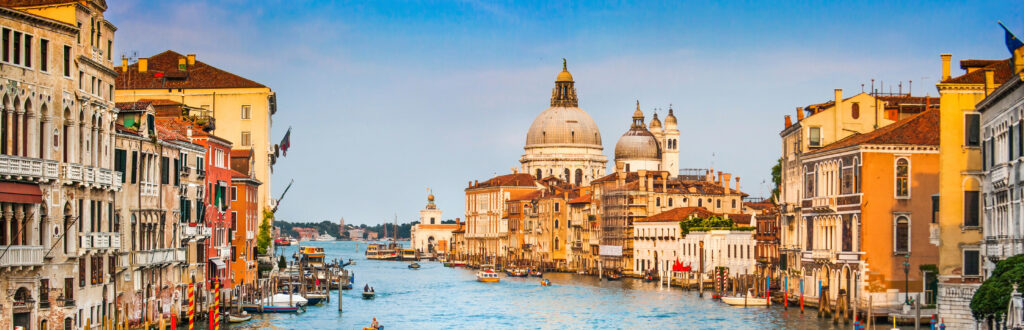
Italy won’t offer the fastest process on this list, but it stands out for lifestyle. It suits people settling in for the long term rather than chasing rapid career moves.
Program: Elective Residency Visa, for financially independent applicants living on passive income (no work of any kind permitted, including remote work for foreign employers).
The numbers: Consulates generally require a minimum of about €31,000/year (roughly €2,583/month) in passive income for a single applicant, rising to around €38,000/year for a couple. Many consulates informally expect higher figures for approval.
2026 policy update: Italy’s Constitutional Court upheld Law 74/2025 on March 12, 2026, confirming the reform that limited citizenship by descent (jure sanguinis) to two generations. That closed off a major alternative pathway many applicants had been counting on, but it doesn’t affect the Elective Residency Visa, which still leads to permanent residence after 5 years and full naturalization after 10, with no Italian ancestry required. (Source: Impatria).
8. Spain

Spain offers a balance a lot of applicants are looking for: reliable healthcare, family-friendly rules, and more than one legal route in depending on how you earn your income.
Programs: Non-Lucrative Visa (NLV) for passive income, and the Digital Nomad Visa (DNV) for remote workers/freelancers.
The numbers: The NLV requires roughly €2,400/month (400% of Spain’s IPREM index) with no work permitted at all. The DNV requires €2,849/month (200% of Spain’s 2026 minimum wage) for a single applicant, with at least 80% of income coming from non-Spanish sources.
2026 policy update: Royal Decree 126/2026, approved February 17, 2026, raised Spain’s minimum wage 3.1% to €1,221/month, which automatically pushed the DNV income threshold up to its current level. Separately, converting from an NLV to a DNV from inside Spain is no longer permitted as of 2026; applicants now have to leave and reapply from a consulate abroad. (Source: Remote Work Europe)
Also worth knowing:
Easiest for Americans: Spain’s Golden Visa (real estate route) closed in 2025, but both the NLV and DNV remain fully open to US citizens..
Flexible work visas & fast residency: Spain’s two-track system (NLV vs. DNV) gives applicants real choice depending on whether they’re retired, self-employed, or remote-employed.
9. New Zealand

New Zealand’s pitch is stability: clean environments, safety, and a genuine work-life balance that a lot of applicants say they can’t find at home.
Program: Skilled Migrant Category (SMC) Resident Visa.
The numbers: The SMC median wage threshold currently sits at NZD $35.00/hour for general roles; Skill Level 4 and 5 jobs require NZD $52.50/hour.
2026 policy update: From August 24, 2026, Immigration New Zealand is rolling out the most significant SMC overhaul in years, including two new pathways (Skilled Work Experience and Trades and Technician), simplified qualification points that favor NZ-earned degrees, and English test results now valid for 5 years for applicants with recognized occupational registration. (Source: Immigration New Zealand).
10. Netherlands
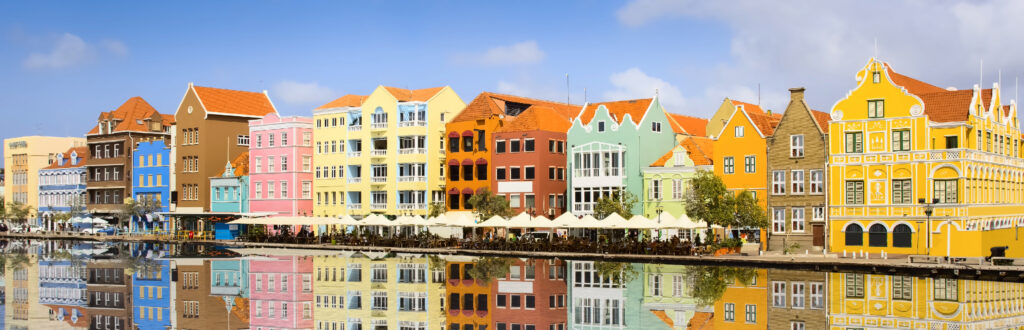
The Netherlands pairs genuine opportunity with efficient systems: English is widely spoken, bureaucracy is comparatively fast, and demand in tech and finance stays high.
Program: Highly Skilled Migrant (Kennismigrant) permit.
The numbers: As of January 1, 2026, gross monthly salary thresholds are €5,942 for applicants aged 30+, €4,357 for under-30s, and €3,122 for the reduced criterion covering recent graduates.
2026 policy update: Thresholds rose roughly 4.5% this year under standard annual indexation. The government had proposed tightening the scheme further (higher thresholds and a shorter window for the reduced-criteria rate), but in November 2025 the newly installed Dutch Parliament signaled those changes need more consideration, so they haven’t been implemented yet. Worth monitoring if you’re planning a 2027 move. (Source: Deloitte Netherlands)
Also worth knowing:
- Easiest for Americans: Widespread English, a fast IND process, and no local employer-of-record hurdles make this one of the more approachable EU moves for US citizens.
Prefer a route that doesn’t hinge on years of points, salary thresholds, or waiting lists? UNO Capital’s residency by investment programs in Greece, Latvia, Malta, the UAE, Panama, and the US offer a faster, investment-based path to legal residence, often with minimal or no physical presence requirement.
Fastest Routes to a Second Citizenship
The ten destinations above are mostly residency-first systems: you move, you work, and citizenship (if it comes at all) is years away. If your priority is a second passport specifically, rather than relocation, a different set of countries applies: citizenship-by-investment programs, where a structured financial contribution replaces years of physical residency.
The most established of these, all offered through UNO Capital, are:
- St. Kitts & Nevis: one of the longest-running CBI programs globally, though a “genuine link” physical presence requirement is expected to be introduced from 2026 onward, bringing it closer to European residency models.
- Antigua & Barbuda
- Dominica
- Grenada: one of the few CBI passports with US E-2 treaty access
- Vanuatu: typically the fastest processing timeline of the group
- Türkiye: citizenship through real estate investment rather than a donation
Timelines and costs vary by program and change with policy updates, so if speed to a second passport is the actual goal, it’s worth comparing these directly against the ten work/residency-based countries above rather than assuming they follow the same rules.
Final Thoughts on Countries to Immigrate to in 2026
Choosing where to move in 2026 is personal. There’s no universal right answer. What matters is legal clarity and a system you can actually plan a life around, whether that means years of skilled work toward residency or a faster route through investment.
UNO Capital guides individuals and families through legal immigration routes, residency planning, and citizenship or residency by investment where that fits better than a traditional visa. Contact us to talk through which route actually fits your goals.
F&Q
Easiest” depends on your profession and budget. Canada’s Express Entry and Portugal’s D7 visa are generally considered the most accessible: Canada for its transparent points system, Portugal for requiring no local job offer or large investment, just proof of stable passive income starting at €920/month.
Citizenship-by-investment programs remain the fastest legal route to a second passport, with some Caribbean programs processing in a matter of months rather than years. Vanuatu is typically the quickest of the established programs; traditional residency-based citizenship elsewhere usually takes 5 to 10 years.
Yes, though the landscape has narrowed. Spain closed its real estate Golden Visa in 2025, and Portugal removed real estate from its Golden Visa in 2023. Portugal’s fund-based Golden Visa (from €500,000) and Greece’s Golden Visa remain open to US applicants in 2026.
No. Income-based visas like Portugal’s D7, Italy’s Elective Residency Visa, and Spain’s Non-Lucrative Visa require proof of stable passive income, not a lump-sum investment. Investment is only required for Golden Visa-style residency or citizenship-by-investment programs.
Portugal (D7), Italy (Elective Residency), and Spain (Non-Lucrative Visa) all offer residency based on passive income alone, with no employer sponsorship needed. Spain’s Digital Nomad Visa works similarly for remote employees and freelancers with foreign clients.
The ten countries above require you to relocate, work, or hold passive income for years before citizenship becomes possible. Citizenship-by-investment programs like those in St. Kitts & Nevis or Dominica grant citizenship directly through a financial contribution, often without ever requiring you to live in the country.


